Citrate-free workflow
Runs ESR from a 2–4 mL whole-blood sample in the same EDTA / CBC tube used for the blood count — no separate citrate tube or dilution step.
Automatic ESR Analyser · DT60 · 60 Channels
Upcoming ProductSedimentation, simplified — automated modified-Westergren ESR straight from the EDTA / CBC tube you already draw for the blood count.
Overview
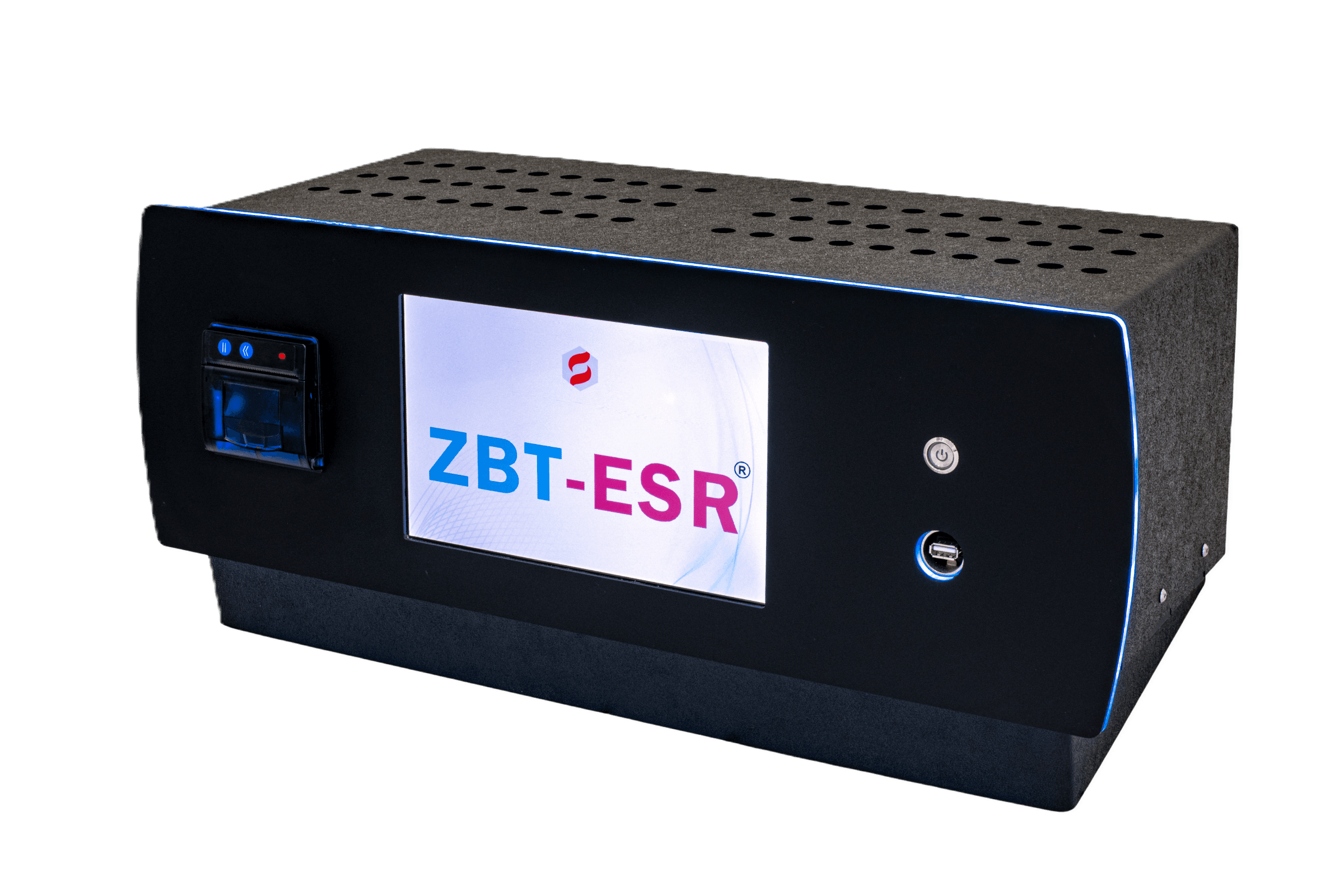
ZBT-ESR® DT60 is an automated erythrocyte sedimentation rate analyzer that runs the ESR test directly from the standard EDTA / CBC tube already drawn for the complete blood count — with no separate citrate tube and a 2–4 mL whole-blood sample.
Samples load continuously with random access across 60 channels. Infrared LED detection and the modified Westergren method provide results at room temperature and 18 °C in 20 minutes, with throughput up to 180 samples per hour and a measuring range of 1–140 mm/hr.
HCT correction using the Fabry formula, DAS28-ESR disease-activity scoring, two-level QC with a Levey-Jennings graph, a 10-inch color touchscreen, barcode reader, thermal printer, LIS over RS-232 / HL7, and Wi-Fi updates support a connected and traceable workflow.
At a glance
Clinical and pathology laboratories and hospital diagnostic departments that run ESR alongside the complete blood count.
Traditional citrate ESR needs a separate tube and dilution step, generates liquid waste, and is slow — adding cost and turnaround pressure.
Runs ESR from a 2–4 mL whole-blood sample in the same EDTA / CBC tube used for the blood count — no separate citrate tube or dilution step.
Infrared LED detection delivers modified-Westergren results at room temperature and 18 °C across a 1–140 mm/hr range.
Continuous random access across 60 channels with throughput up to 180 samples per hour.
Hematocrit correction uses the Fabry formula.
Built-in DAS28-ESR disease-activity scoring supports rheumatoid-arthritis assessment.
Two-level QC is displayed with a Levey-Jennings graph.
Barcode reader, thermal printer, LIS over RS-232 / HL7, and Wi-Fi software updates support a traceable workflow.
Because there is no citrate dilution, there is no liquid waste to dispose of — lowering disposal cost.
Place the standard EDTA tube directly into any free channel — random access across 60 channels.
Infrared LED detection measures a 1–140 mm/hr range and calculates the result by a modified Westergren method.
Results at room temperature and 18 °C are displayed, printed, and transmitted to the LIS over HL7 — with no liquid waste.
Applications
High-volume ESR integrated with the CBC workflow, with no citrate handling.
Inflammation screening and monitoring alongside the complete blood count.
Fast, standardized ESR with random-access loading and low waste.
No. ZBT-ESR® DT60 runs the ESR test directly from the standard EDTA / CBC tube already drawn for the blood count — there is no separate citrate tube and no dilution step.
ZBT-ESR® DT60 reports modified-Westergren results in 20 minutes, with continuous random-access loading across 60 channels and throughput up to 180 samples per hour.
A 2–4 mL whole-blood sample in the standard EDTA / CBC tube.
Infrared LED detection with a modified Westergren method, providing results at room temperature and 18 °C across a 1–140 mm/hr range.
Yes. ZBT-ESR® DT60 connects over RS-232 with HL7, and includes a barcode reader and thermal printer.
ZBT-ESR® DT60 runs from the EDTA / CBC tube with no citrate, while ZellESR® is a Westergren analyzer that uses 3.8% sodium-citrate tubes with infrared LED detection.
Tell us about your laboratory, throughput, and connectivity needs. Our team will help confirm the right configuration and pricing.